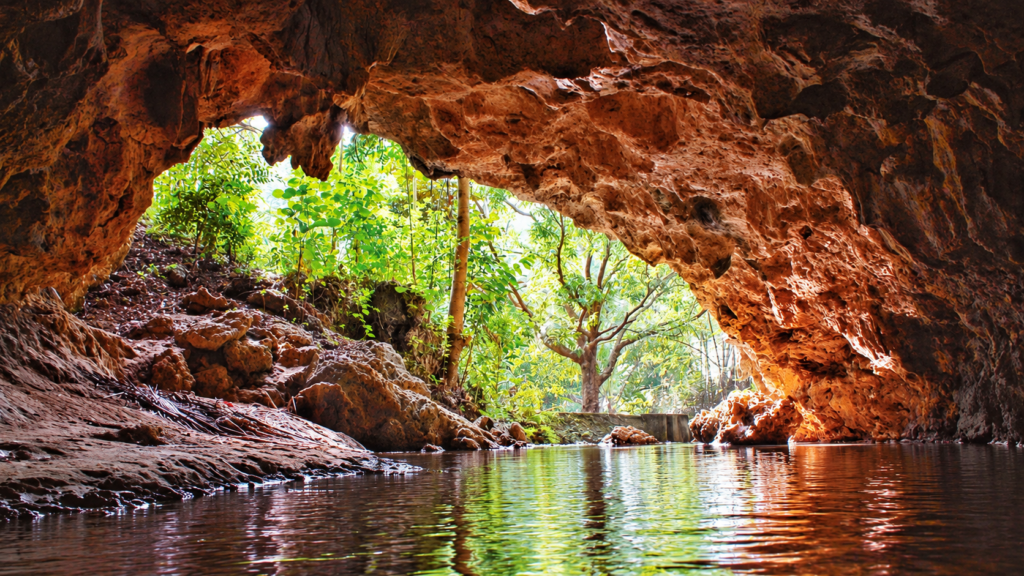
Talabong Mangrove Park in Bais introduces a different perspective on the coast of Negros Oriental. Here, the attraction is a forest shaped by its relationship with the sea. The provincial government identifies Talabong as a mangrove destination with a bamboo boardwalk, wild ducks and migratory birds.
Its appeal lies in the opportunity to explore this environment from within. A path through the trees gives the visit a sense of direction, while the surrounding habitat encourages visitors to pause, look more closely and appreciate details that might disappear in a distant coastal view.
A Forest at the Edge of the Sea
Mangroves occupy the intertidal zone, where land and sea meet. These trees are adapted to conditions that challenge most plants, including salt water, waterlogged soils and the repeated movement of the tides. Their specialised roots are among the most recognisable features of this coastal environment.
At Talabong, the mangrove setting offers a useful contrast to the open water and exposed sand of nearby coastal excursions. The focus moves towards the forest itself: the arrangement of trunks, the shapes of roots and the relationship between vegetation and the ground beneath it.
Understanding the tides adds another dimension to a visit. A mangrove forest is a changing environment, with water levels influencing what is exposed and what lies beneath the surface. The shoreline becomes something to observe over time, rather than a fixed boundary on a map.
Following the Boardwalk
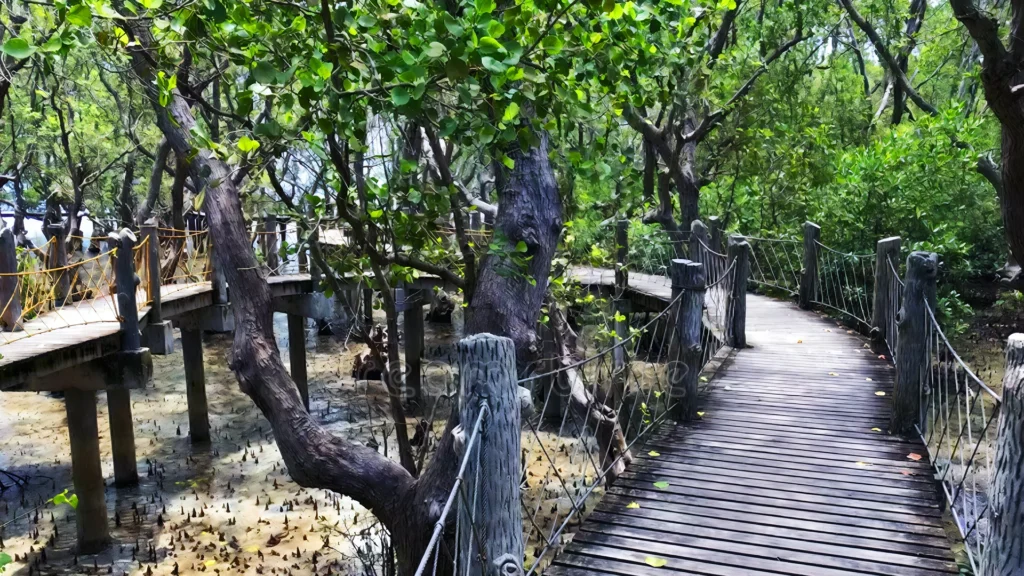
The boardwalk is central to Talabong’s identity as a visitor destination. The provincial tourism description presents it as a route through the mangrove island, while a published visitor account describes a walkway winding into the forest.
A boardwalk gives this landscape a human scale. Instead of viewing a stretch of coastal woodland from outside, visitors can follow a defined route and turn their attention towards the immediate surroundings.
For families, that offers the prospect of a shared exploration. Children can look for differences between trees, examine the shapes of visible roots and listen for birds. Simple questions can guide the experience: how do these trees grow beside the sea, and what changes when the tide rises?
The interest comes from discovery rather than a prescribed programme. A visit can be approached as a walk with time to stop and notice, allowing different members of a family to find their own points of curiosity.
Looking for Birdlife
Talabong’s documented birdlife adds another reason to explore quietly. The provincial government identifies wild ducks and migratory birds among the inhabitants of the mangrove setting.
Birdwatching here is best understood as an opportunity rather than a promised encounter. Visitors may find that listening and waiting are as rewarding as moving along the route. Binoculars can help bring more distant activity into view without approaching or disturbing wildlife.
For children, looking for birds can give the walk a purpose. For adults, it offers a reason to slow down and attend to a landscape whose interest may reveal itself gradually.
Understanding a Living Coastline
Mangroves have a practical role beyond their visual character. Their root systems provide shelter for young fish and crustaceans, while helping to hold coastal soils in place. Mangrove habitats connect the forest at the water’s edge with the wider marine environment.
That relationship gives a visit an educational dimension without requiring a formal lesson. Looking at roots and tidal ground can become a starting point for understanding how coastal habitats support life.
Respectful exploration means following permitted routes, leaving plants and wildlife undisturbed and taking litter away. The setting is most rewarding when observation remains the principal activity.
Another Perspective on Negros Oriental
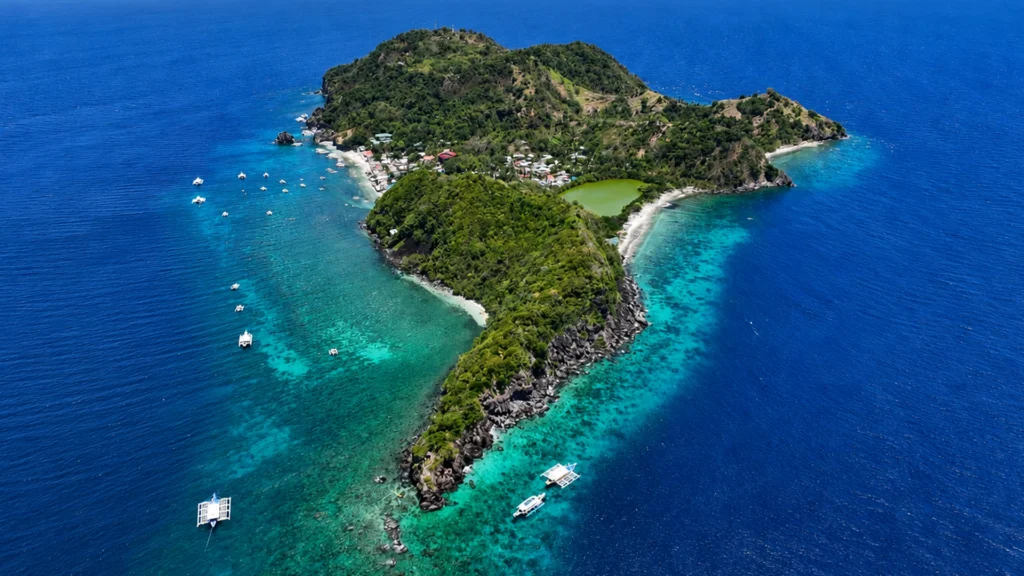
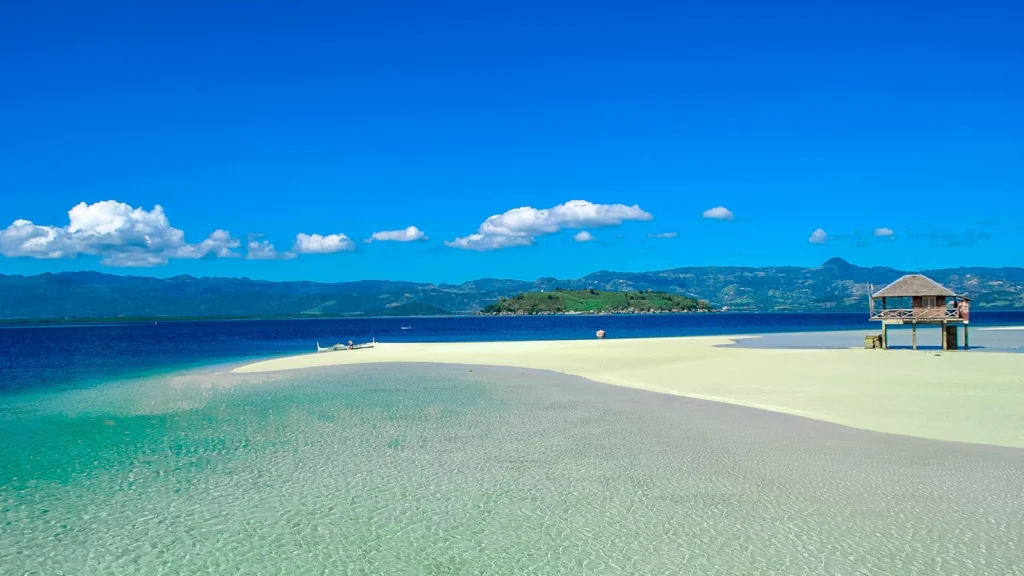
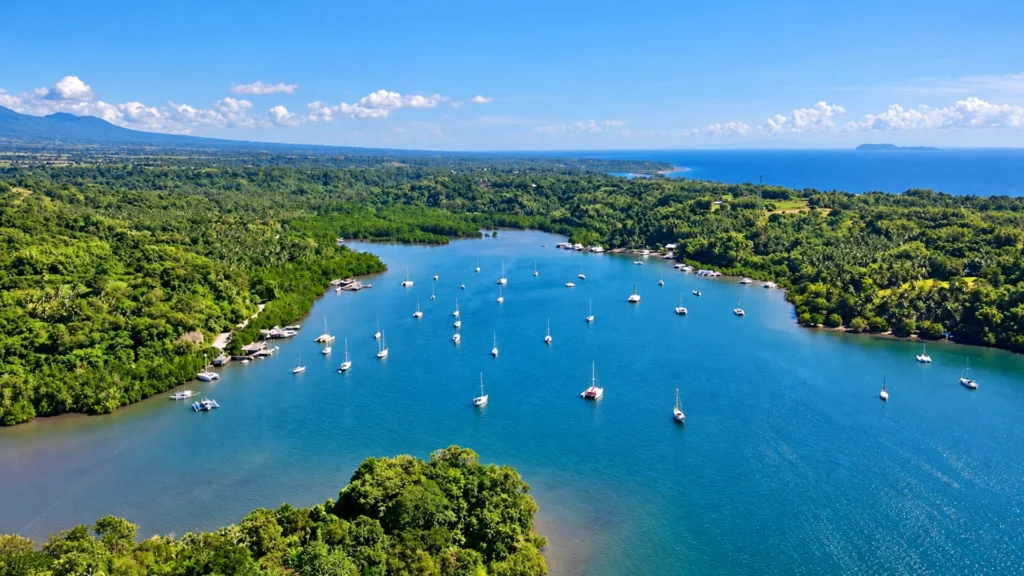
For visitors exploring the region from Tala, Talabong broadens the coastal experience. Alongside island shores, sandbars and sheltered sailing bays, it introduces a landscape where woodland and tidal waters meet.
Its particular appeal is the possibility of discovering that landscape together. The boardwalk provides a route, while the mangroves and birdlife provide reasons to pause along it. Talabong invites visitors to appreciate the coast through close observation, curiosity and time spent within the environment.