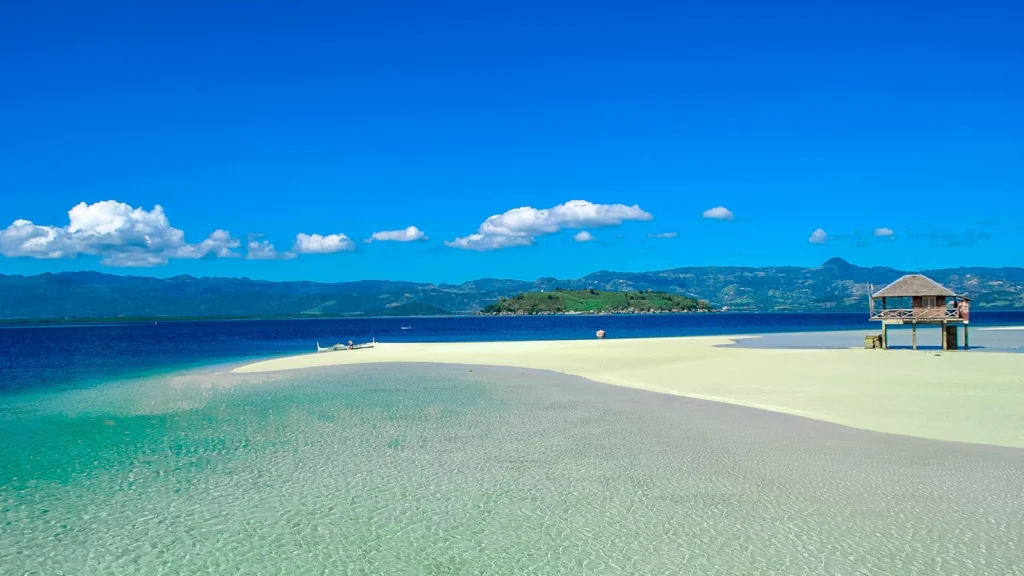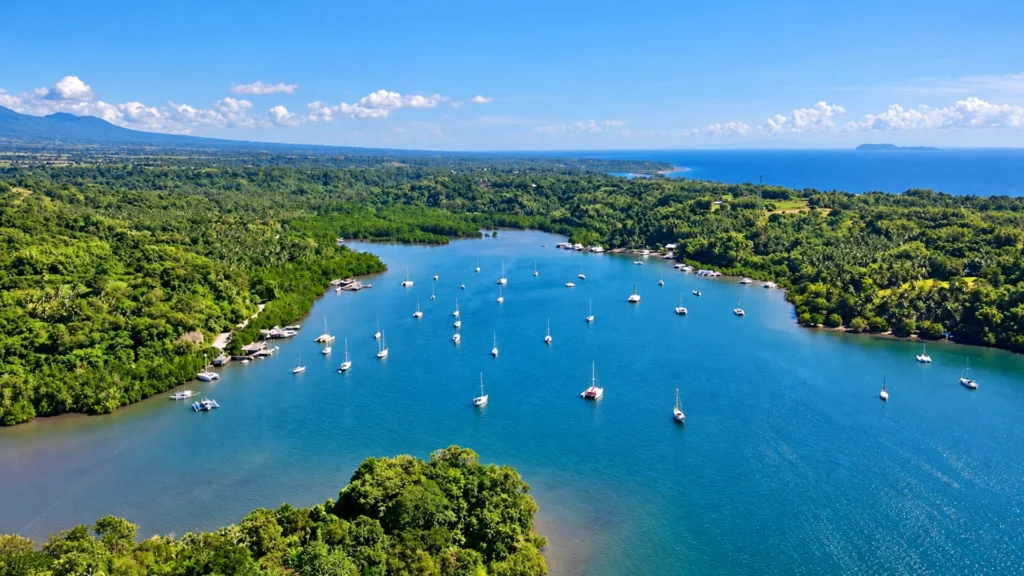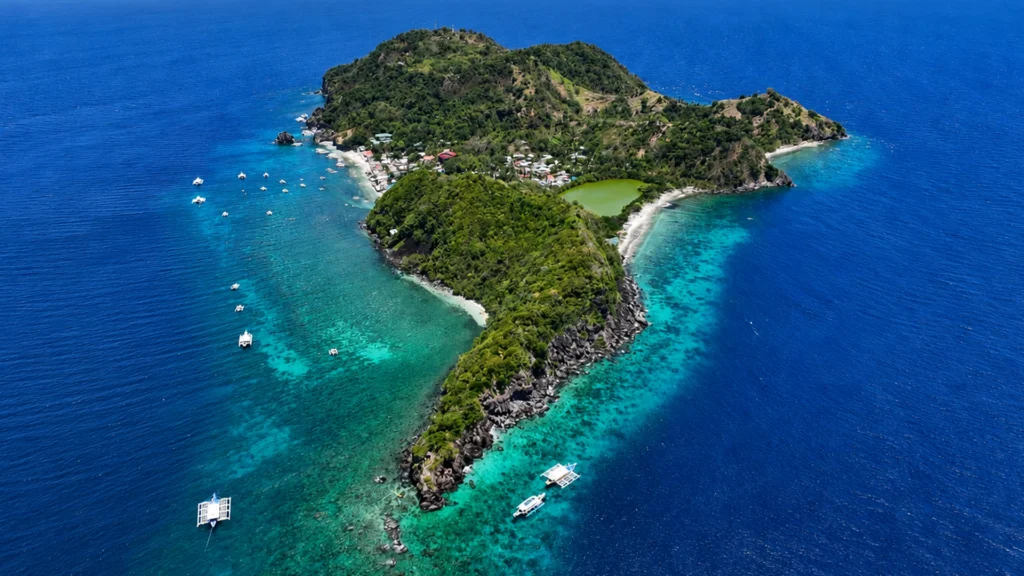
A short distance offshore from the southern coast of Negros Oriental lies Apo Island, a small volcanic island whose influence extends well beyond its shores. Known for its coral reefs, resident marine turtles and pioneering approach to marine conservation, it offers a distinctive introduction to the natural environment of the central Philippines.
For visitors staying around Dauin and Dumaguete, Apo Island is an opportunity to experience a different side of Negros, where the landscape continues beneath the surface of the sea and the relationship between a community and its environment is particularly visible.
A Small Island with an Extraordinary Marine Environment
Apo Island lies in the Bohol Sea, off the southeastern coast of Negros Oriental. Administratively part of Dauin municipality, the island occupies approximately 74 hectares, with a rugged volcanic landscape, tropical vegetation, rocky shores and a small coastal settlement.
Its most significant natural features are found underwater.
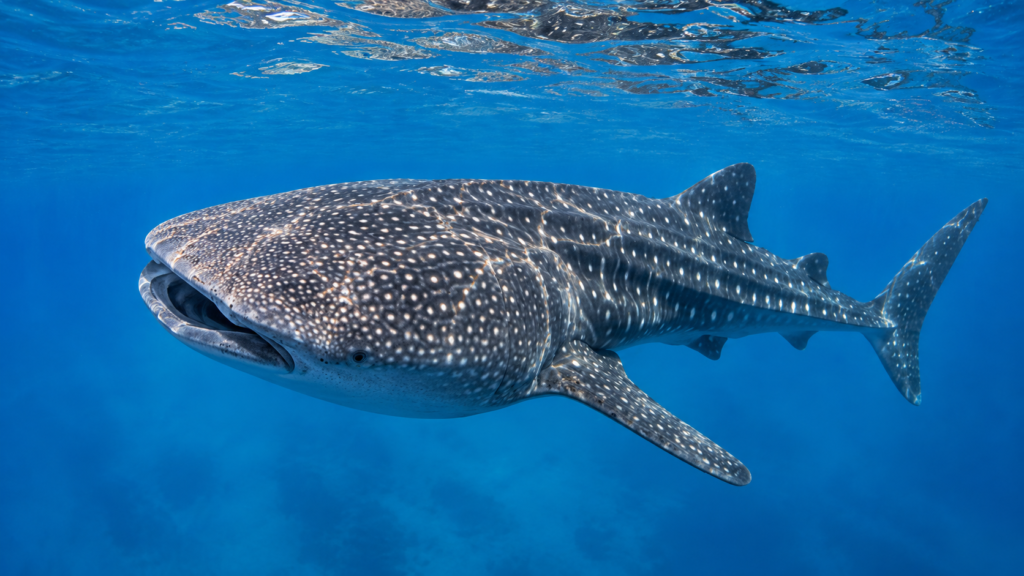
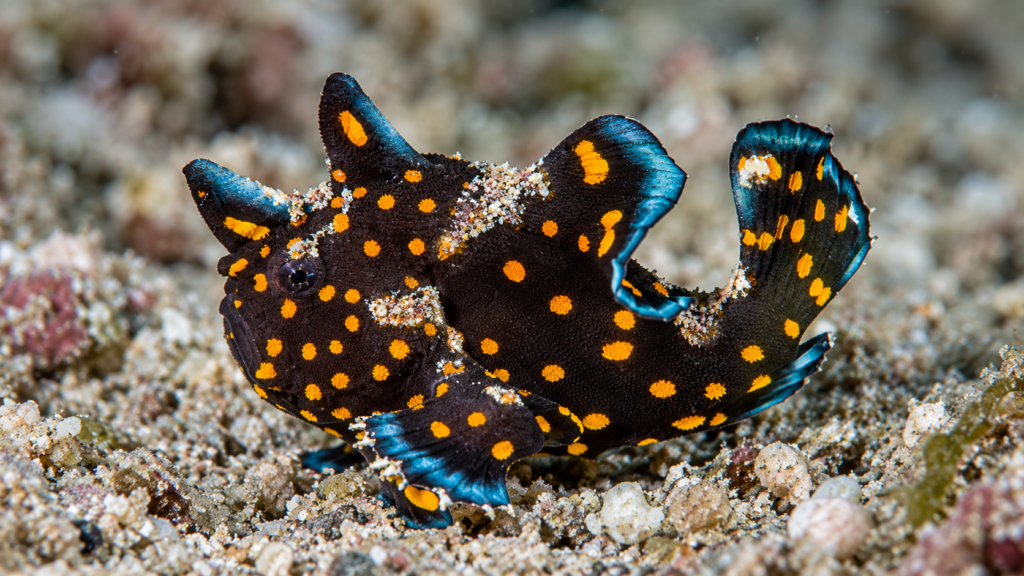
The surrounding reefs support a rich variety of hard and soft corals, reef fish and other marine organisms. Shallow coral gardens give way to steeper slopes and underwater walls, creating different habitats within a relatively compact area.
These environments make Apo Island particularly interesting because visitors can observe the complexity of a tropical reef without travelling far from the mainland.
The island is also an important example of how protecting a relatively small marine environment can contribute to the health of a much wider ecosystem.
Snorkelling, Diving and Marine Turtles
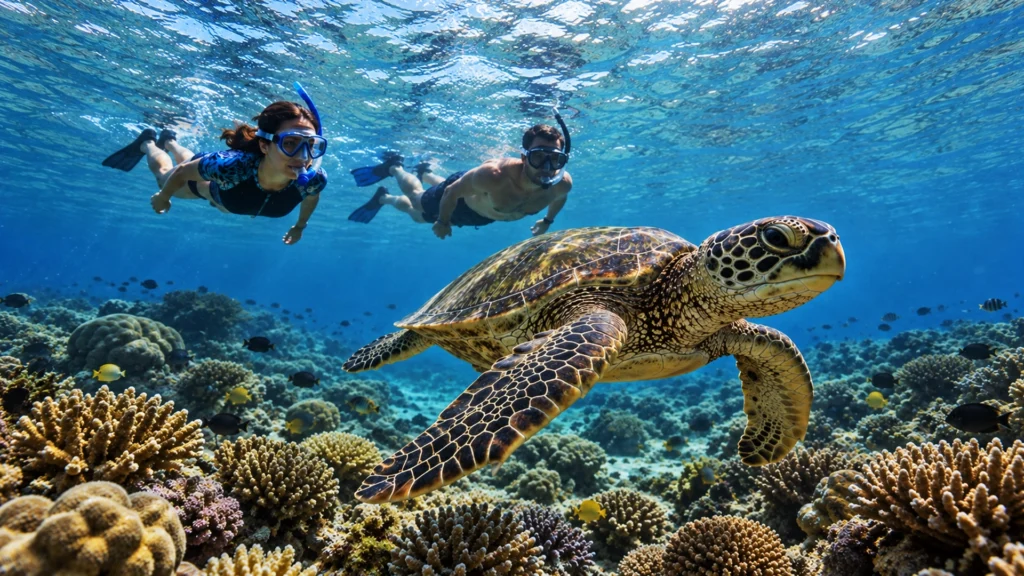
For many visitors, Apo Island’s most memorable experience is encountering marine turtles in their natural habitat.
Green sea turtles are regularly observed feeding in the shallow waters around the island. Snorkellers may see them moving slowly over seagrass or surfacing to breathe, sometimes surprisingly close to shore.
These encounters are particularly rewarding because they take place in an open marine environment rather than a managed attraction. The turtles are wild animals, and their presence, movements and proximity cannot be guaranteed.
Beyond the shallows, Apo Island offers diving environments suited to different levels of experience. Coral slopes, reef walls and areas of stronger current provide opportunities to observe reef fish, schooling species and the structure of the underwater landscape.
Conditions vary between sites, making local knowledge and appropriate supervision important.
For those who prefer to remain near the surface, guided snorkelling provides an accessible way to appreciate the marine environment without specialist diving qualifications.
A Community That Helped Change Marine Conservation
Apo Island’s significance is not simply ecological. Its conservation history has made it an influential example of community participation in protecting marine resources.
In the late 1970s and early 1980s, researchers from Silliman University, including marine scientist Dr Angel Alcala, worked with local residents and fishing families to develop a different approach to managing the surrounding reefs.
In 1982, the community established a protected marine sanctuary, restricting fishing within a designated area while allowing regulated fishing elsewhere.
The principle was straightforward: protecting breeding and feeding habitats could help marine populations recover and, over time, support fisheries beyond the protected area.
The programme became an important reference point for marine conservation initiatives elsewhere in the Philippines and internationally.
Today, Apo Island remains a living community rather than simply a destination for visitors. Fishing, tourism and conservation are closely connected, and the island’s history illustrates both the
opportunities and responsibilities that accompany the use of natural resources.
Visiting with Respect
Apo Island’s appeal depends upon the continued health of its marine environment.
Visitors should avoid touching or pursuing turtles, standing on coral, disturbing marine animals or removing anything from the reef. Following local guides and observing designated swimming areas helps protect both visitors and the habitats they have come to experience.
Sun protection, drinking water, suitable footwear and appropriate swimming equipment are useful preparations. Facilities are relatively limited compared with mainland resorts, and visitors should be prepared for an outdoor experience shaped by the conditions of the day.
Apo Island is best approached with curiosity rather than a fixed itinerary. Some days offer clear water and gentle conditions; others require patience or a change of plans.
Part of a Wider Negros Lifestyle
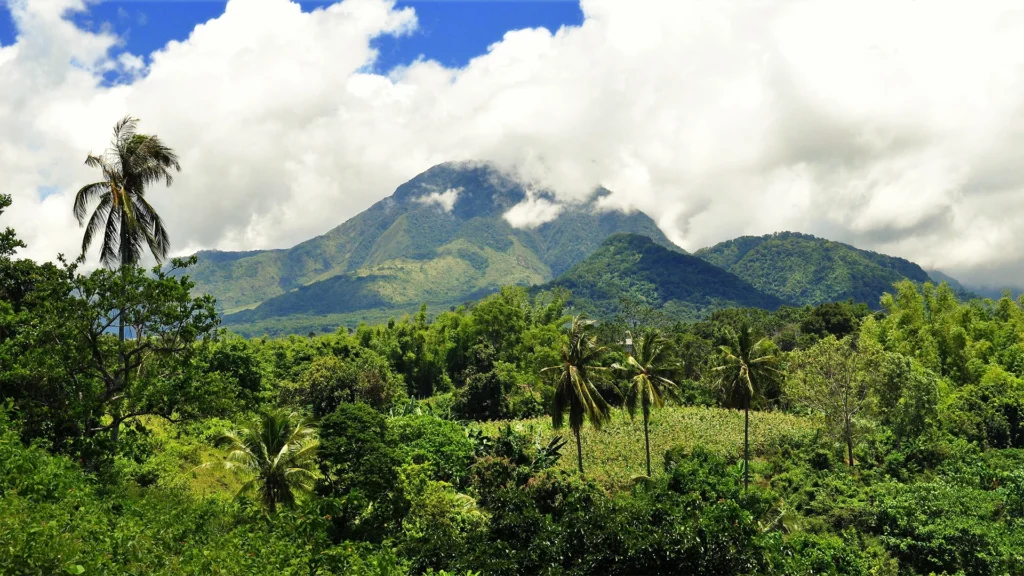
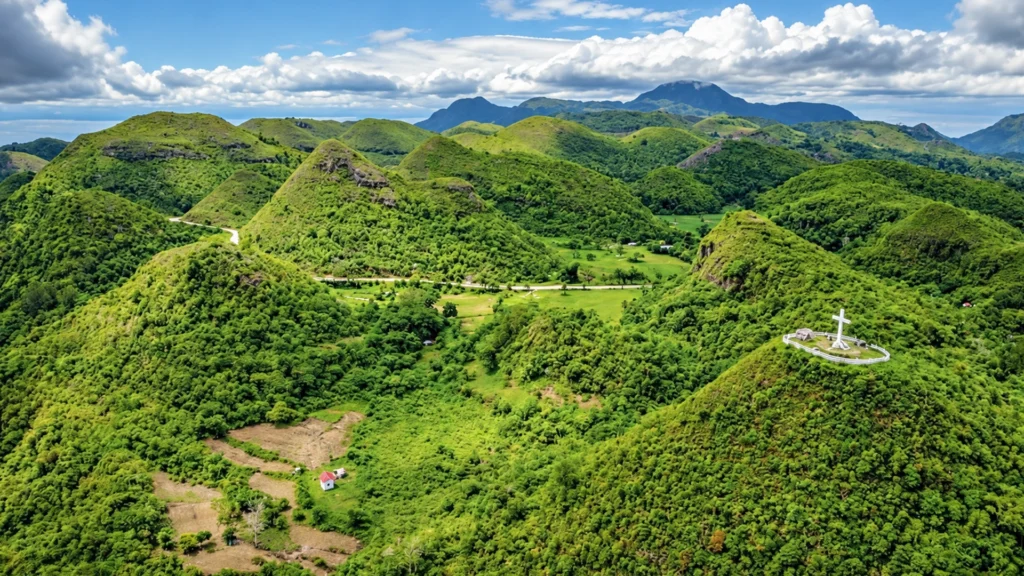
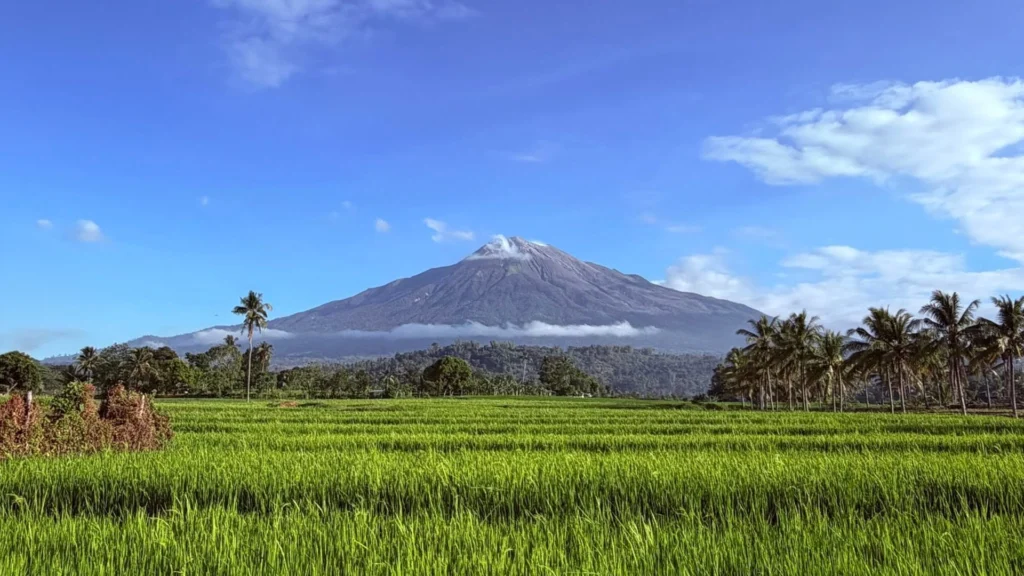
Apo Island demonstrates one of the defining qualities of southern Negros Oriental: the close relationship between its mountains, coastal settlements and marine environment.
Within the wider Dauin area, experiences can move from forested hillsides and agricultural landscapes to coral reefs and open water, often within the same day.
For Tala, this diversity forms part of the wider setting in which residential life, hospitality and exploration can develop together.
Apo Island is not simply somewhere to visit once. It represents the possibility of living within reach of distinctive natural environments while recognising the responsibility to preserve what makes them valuable.