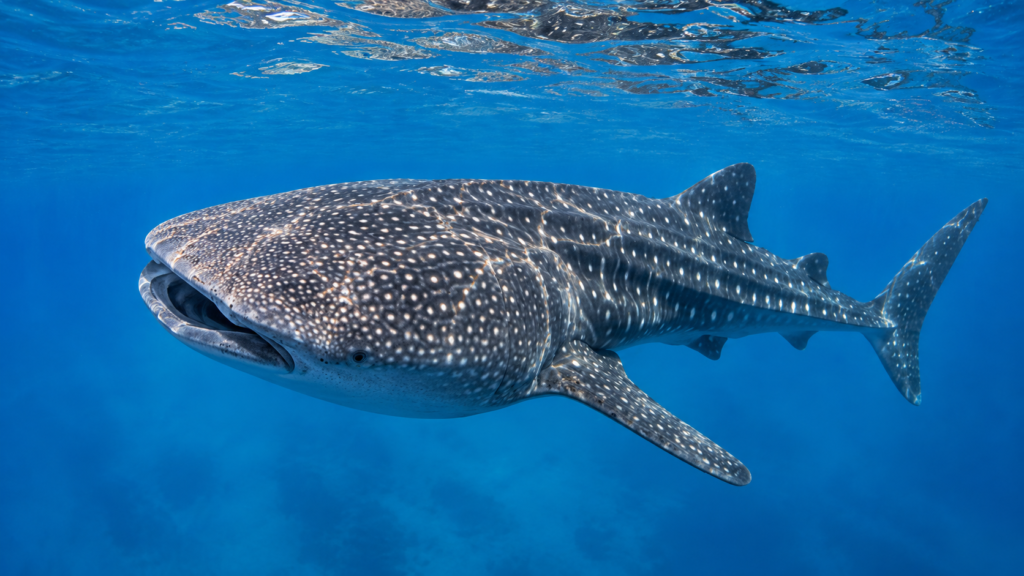
The outline of a thresher shark is unmistakable: a streamlined body followed by an exceptionally long upper tail. A whale shark offers a different impression, with a broad head, patterned skin and a scale that sets it apart from the surrounding fish. Both give underwater exploration a compelling focal point, bringing attention to individual animals within a much larger marine environment.
From a base in southern Negros, these experiences belong to the wider island region. Malapascua, off northern Cebu, is associated with thresher sharks visiting natural cleaning stations. Pintuyan, in Southern Leyte, offers encounters with whale sharks feeding naturally in local waters. They are distinct destinations for separate trips, each adding a different perspective to the marine landscapes of the Visayas.
Malapascua’s Distinctive Sharks
Malapascua lies off the northern end of Cebu, within the municipality of Daanbantayan. Its offshore shoals provide the setting for scuba encounters with pelagic thresher sharks, whose elongated tails give them a distinctive shape even when seen at a distance.
The attraction extends beyond appearance. Monad and Kimud Shoals are underwater elevations where sharks interact with cleaner fish. Rather than simply passing through, an animal may circle in a way that allows these smaller fish to inspect its body. Observing that relationship gives the dive a behavioural focus: the shark is engaged in an activity that brings it to a particular part of the underwater landscape.
Kimud features prominently in established thresher diving accounts. The encounter calls for patient observation, allowing the sharks to approach and continue their cleaning behaviour. Its appeal comes from seeing an elusive ocean animal use a natural site, rather than being drawn towards visitors with food.
Whale Sharks in Southern Leyte
Pintuyan sits on Panaon Island in Southern Leyte, in the wider Sogod Bay area. Here, whale shark encounters follow a different pattern, with local guides and spotters helping visitors observe animals present in the coastal waters.
Despite their name, whale sharks are fish. Their broad mouths filter food from the water, including plankton and small fish. That combination of enormous size and feeding on small organisms gives them an unusual place in the imagination: an animal whose presence can dominate the view while its feeding depends on concentrations of much smaller life.
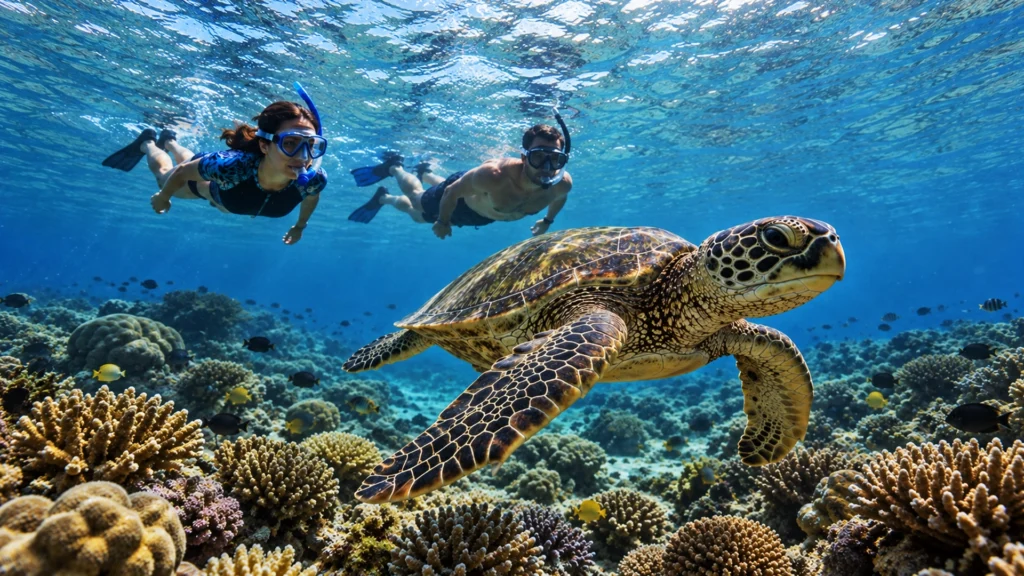
Snorkelling provides a way to observe them from near the surface. The spotted pattern, breadth of the body and movement of the tail make the animal itself the principal subject. Encounters are seasonal and depend on natural presence, so neither a sighting nor a particular duration should be assumed.
Pintuyan’s stated tourism rules prohibit feeding, baiting and touching. This is central to the experience described here: visitors encounter animals following their own movements and feeding opportunities.
The Possibility of Mantas
Manta rays add another form of large marine life to the Malapascua setting. The scientific assessment of Monad and Kimud Shoals records the oceanic manta ray among the area’s supporting species, while diving accounts describe possible encounters.
Their wide fins create a silhouette very different from a shark’s. For someone interested in underwater photography, that shape offers another way to compose an animal against open water. For an observer, the attraction is the contrast between the ray’s broad form and its movement through the sea.
Mantas are supporting interest here, rather than the basis for a promised excursion. Malapascua’s thresher sharks provide the stronger established focus. Keeping that distinction allows room for an unexpected encounter without overstating what visitors can expect to see.
Observation with a Purpose
These animals also connect tourism with research. At Malapascua’s shoals, scientific studies have examined thresher cleaning behaviour and movements. In Southern Leyte, LAMAVE has worked with local communities and used photographs of whale shark spot patterns to recognise individual animals.
The community dimension is equally relevant. Pintuyan’s whale shark tourism involves local guides and spotters, while LAMAVE’s work has included support for a women’s association making whale shark souvenirs. The animal encounter therefore sits within a wider story of knowledge, local participation and livelihoods.
Natural wildlife tourism still depends on how encounters are managed. Its value lies in observing behaviour while leaving the animals space to continue it.
A Wider Sea to Explore
Malapascua and Pintuyan extend the marine proposition beyond the reefs immediately associated with Dauin. They suit different interests: thresher encounters are a scuba experience, while Pintuyan’s whale sharks can be observed through guided snorkelling.
These are destinations for dedicated stays within the wider Visayas, rather than brief additions to a local beach outing. For people considering a base at Tala, they introduce a broader geography of exploration, with southern Negros as one part of an island region whose seas offer markedly different encounters.