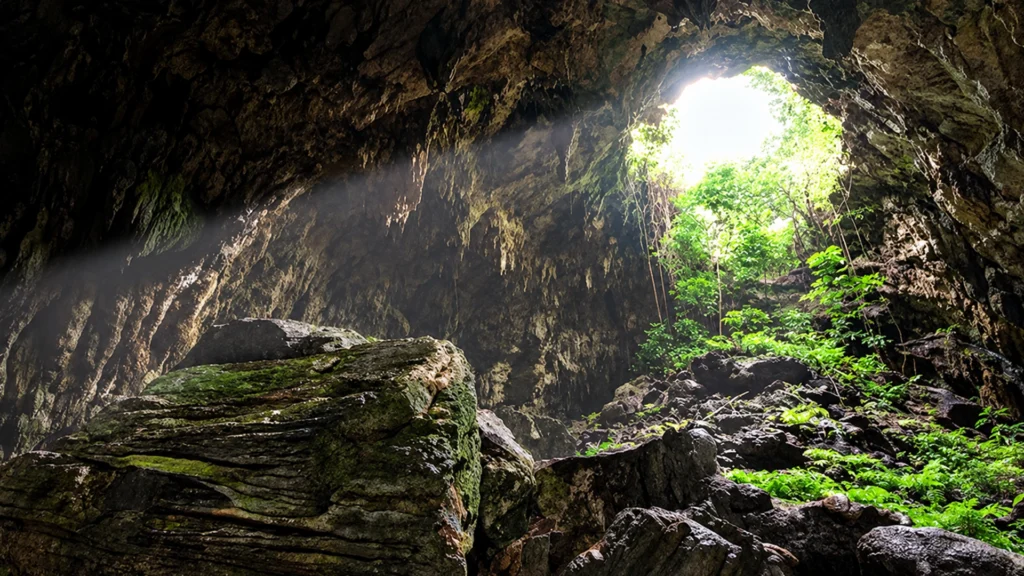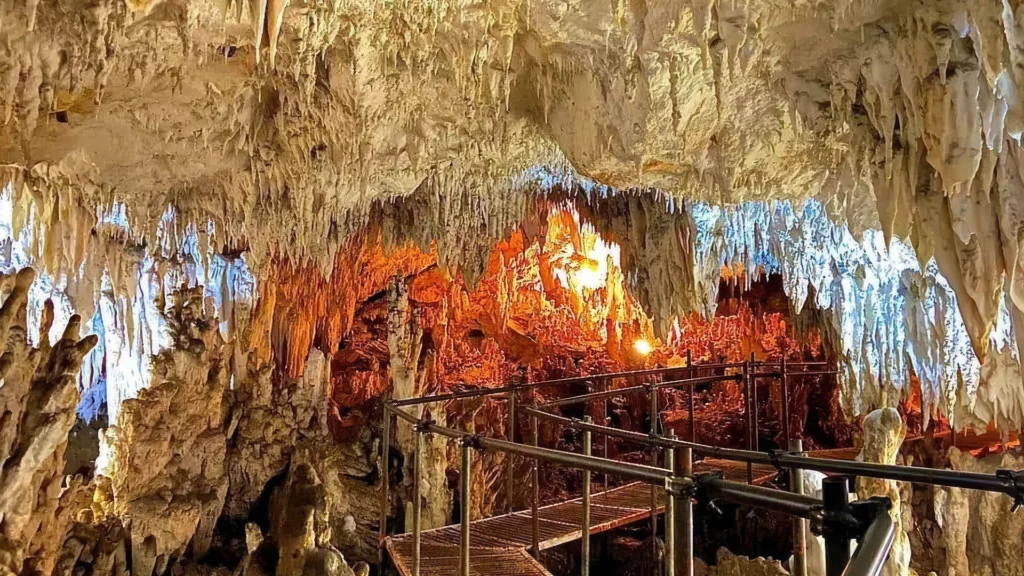
Inside Crystal Cave, the attraction is in the detail. Stalactites descend from the ceiling, stalagmites rise from the floor, and light reveals the surfaces of mineral formations within the limestone chamber. This is a place to look closely at the shapes water has helped create beneath Mabinay’s hills.
Located in Bulwang, Crystal Cave belongs to a group of caves that introduces the underground landscapes of Negros Oriental. Also known in published accounts as Gasidlak, it offers a distinct perspective on the provincial interior: an encounter with the fine structure of stone.
A Landscape of Mineral Forms
Descriptions of Crystal Cave consistently identify its abundance of stalactites and stalagmites. Their opposing forms give the interior much of its visual interest, drawing attention upwards to the roof and downwards to the floor.
These formations create subjects at different scales. The outline of a group can be appreciated as part of the chamber, while individual surfaces reward closer observation. For someone interested in natural forms, the cave offers a setting in which small details carry much of the attraction.
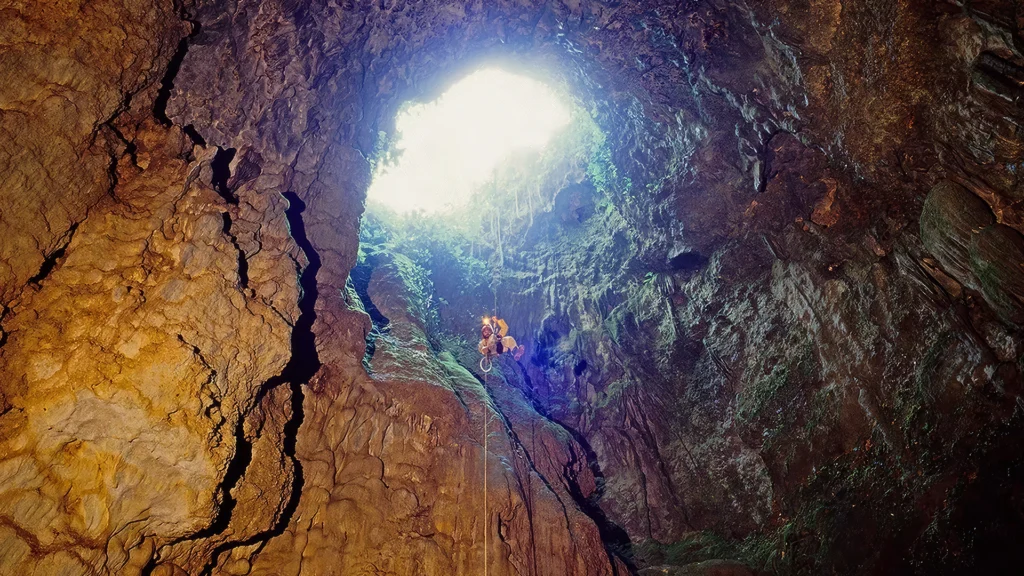
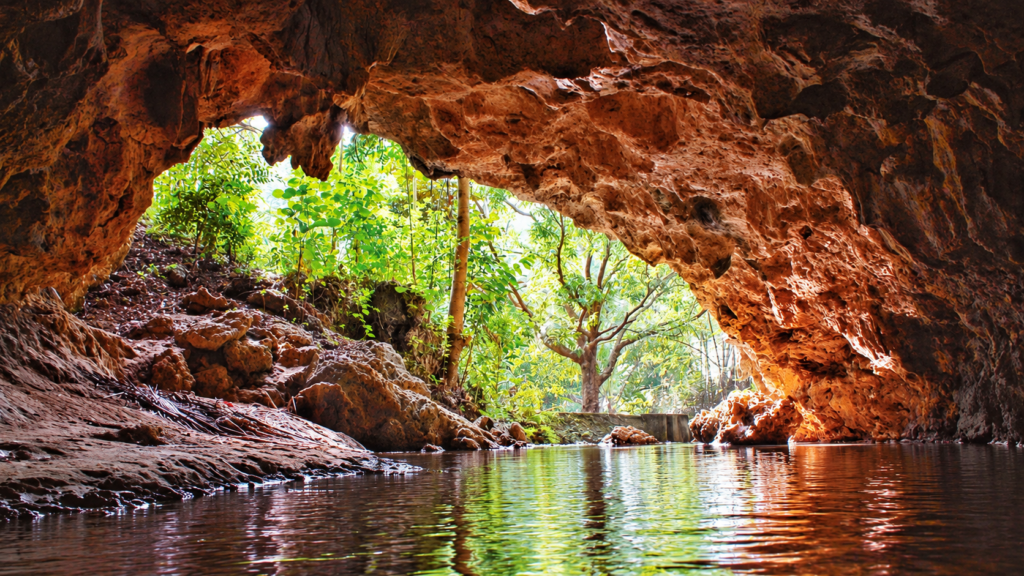
A published account from the National Commission for Culture and the Arts describes an unassuming entrance, appearing as a broad crack in the ground. That modest opening gives little indication of the mineral landscape recorded inside. The contrast between entrance and interior is part of Crystal Cave’s appeal.
What Light Reveals
The name Crystal Cave finds a visual counterpart in descriptions of its reflective formations. In a documented visit published by GRID Magazine, a guide’s torch reveals mineral surfaces that gleam under the light.
That effect gives illumination an important role in appreciating the cave. Light makes the edges and textures of formations visible, allowing the eye to distinguish details within the enclosed space.
Regional visitor coverage also records a walkway through the interior. Such accounts establish a history of guided viewing, although they do not justify assuming that facilities or visiting arrangements remain unchanged.
For photography, the strongest subject is the relationship between light and mineral form. A view showing both the formations and their setting can convey more of the destination than a close crop of an isolated surface.
The Work of Water
The cave’s limestone formations belong to processes operating on a very different timescale from a visit. Mineral bearing water can leave deposits as it drips or flows through a cave, gradually building the features known as stalactites and stalagmites.
Understanding that process adds substance to what is visible. A pointed formation or layered surface becomes evidence of repeated deposition, rather than simply an unusual shape.
Crystal Cave brings this slow accumulation into focus. Its contribution to Mabinay’s underground landscape is the opportunity to study form, texture and reflected light in a relatively compact setting. The appeal lies in sustained attention to the stone itself.