There is something appealing about a place that offers more than one perspective on its surroundings. Negros Oriental captures that spirit, where landscape rises from established coastal communities towards the mountainous interior, creating a transition between two very different environments.
Tala sits within that transition, on a low ridge inland from Dauin, approximately 125 metres above sea level. It is neither a beachfront resort nor a mountain retreat. Instead, its position offers an opportunity to bring elements of both environments into a single residential and hospitality concept.
That relationship provides the starting point for Tala’s identity: Mountain to Sea.
A Landscape with Two Perspectives
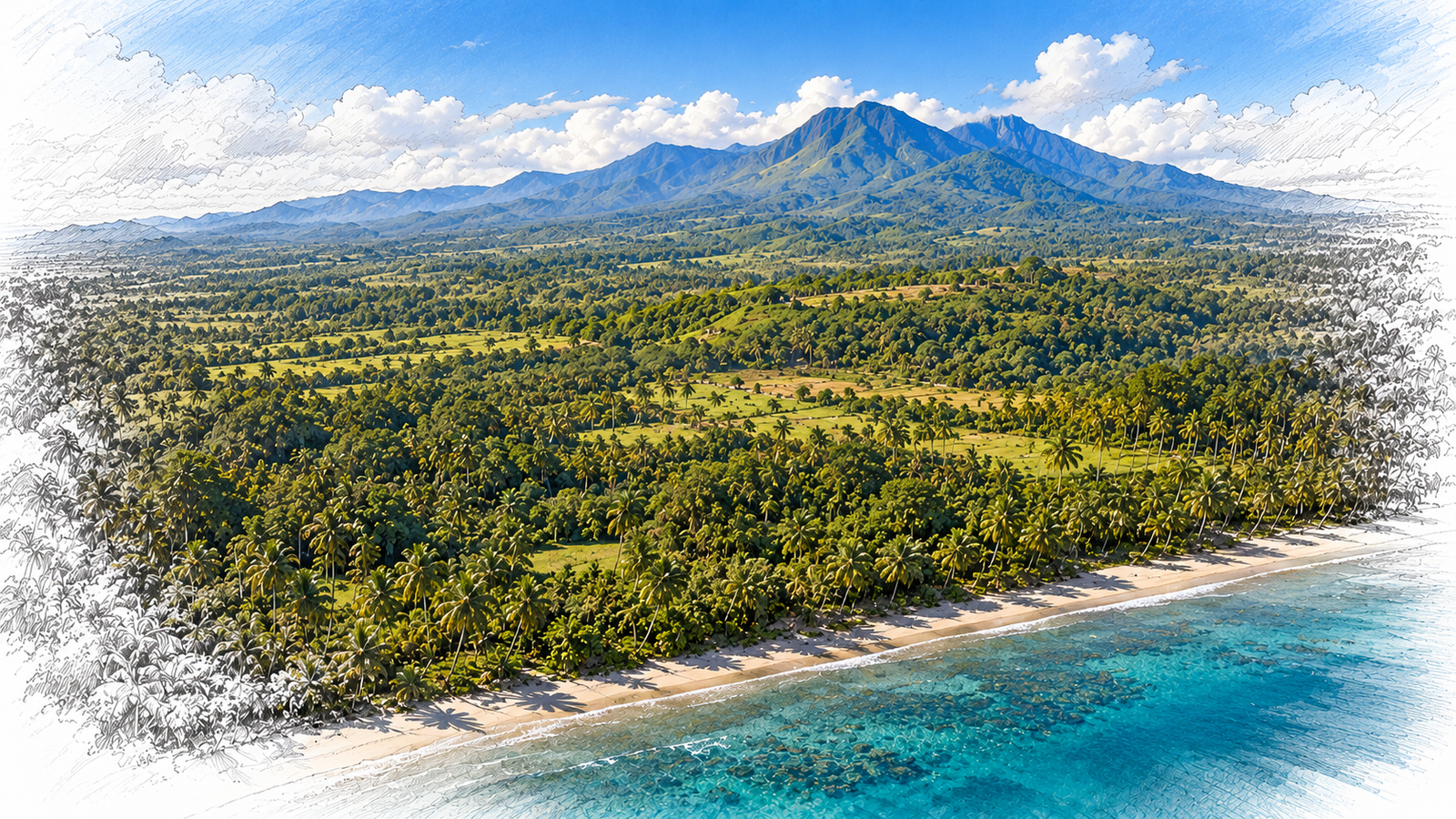
Negros Oriental’s geography is characterised by a relatively narrow coastal plain and an inland landscape that rises towards the island’s mountain ranges. Around Dauin, the terrain gradually climbs towards Mount Talinis, creating a series of different elevations and outlooks.
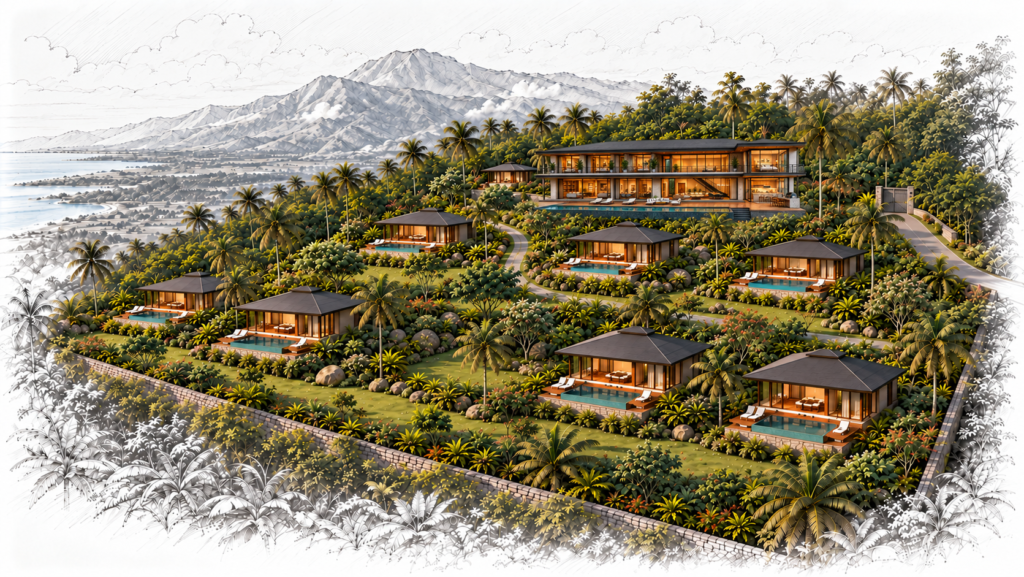
Tala occupies a modest position within this geography, but one with its own advantages. Looking towards the coast, the landscape opens towards the sea, with distant islands visible from suitable vantage points. In the opposite direction, the mountains provide a contrasting backdrop of rising land and tropical vegetation.
These views are not identical across the property, nor should they be. Some locations may have a stronger coastal outlook, while others will be defined by greenery, neighbouring terrain or the inland mountains.
This variety is an important part of the proposition. Rather than treating every location as an opportunity to reproduce the same view, Tala can draw character from the different qualities of its surroundings.
The Advantages of a Ridge Setting
Elevation changes the experience of a place, even when the difference is relatively modest.
At approximately 125 metres above sea level, Tala occupies a position sufficiently removed from the immediate coastline to create a different sense of setting. The ridge offers the potential for more open outlooks, a closer relationship with the surrounding vegetation and a quieter residential atmosphere.
The setting also introduces practical considerations. Exposure to breezes, sunlight and rainfall can vary according to orientation and local terrain. These are important influences on the comfort of outdoor spaces and the experience of living in a tropical environment.
The objective is not to recreate a highland resort. Tala’s appeal lies in combining a sense of separation from the coast with continued access to the wider Dauin area.
For a visitor, that distinction could provide an attractive alternative to conventional beachfront accommodation. For someone considering a longer stay or eventual residence, the same setting may offer a more settled relationship with the surrounding landscape.
Bringing Mountain and Sea Together
The idea of Mountain to Sea is more than a description of geography. It suggests an approach to creating a development with a recognisable identity.
Coastal and highland environments often attract people for different reasons. The coast offers access to the sea, marine activities and established hospitality destinations. The inland landscape offers greenery, open space and a different pace of life.
Tala has the opportunity to connect these interests without attempting to reproduce either environment artificially.
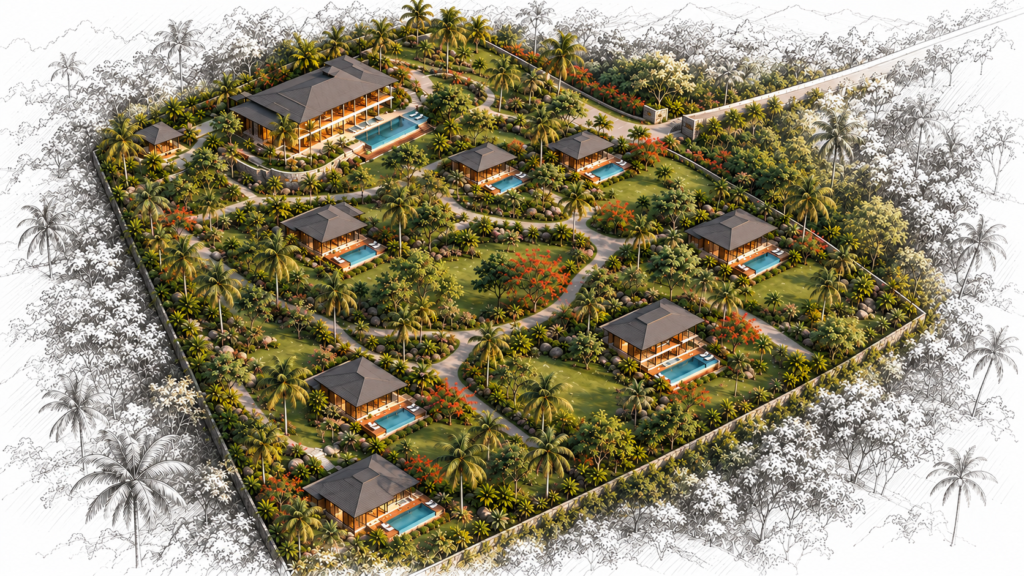
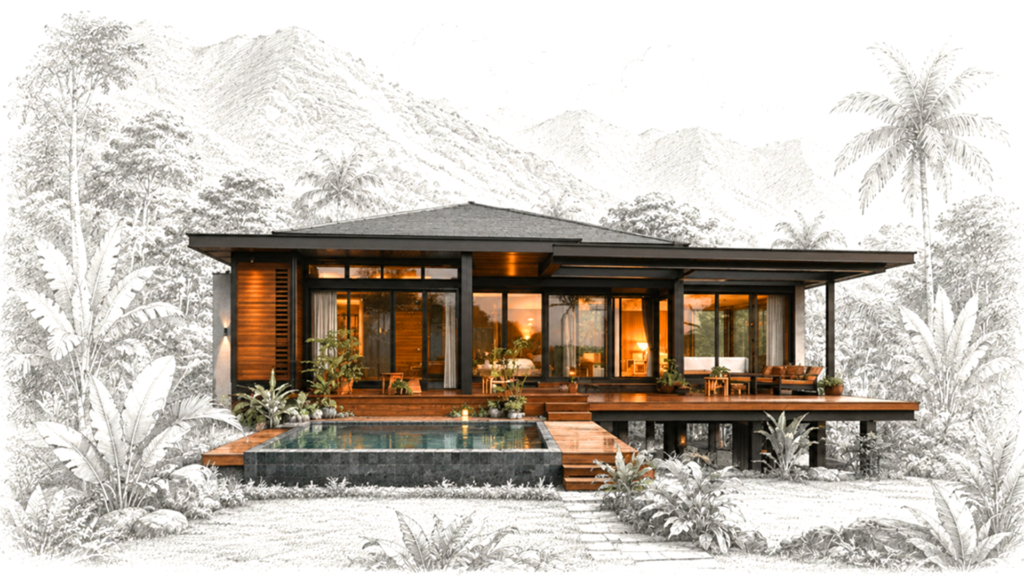
Its architecture could respond to the different outlooks and natural conditions of the ridge. Shared spaces could make the landscape part of the everyday experience, while residential accommodation could offer a sense of privacy and connection with the surroundings.
Importantly, this approach has relevance to different audiences. Someone visiting for a few days may value the combination of coastal access and a quieter inland base. A longer stay resident may place greater importance on privacy, comfort and the familiarity of the setting.
The same geographical identity can therefore support different patterns of use over time.
Letting the Landscape Define Tala
One of the more important decisions in developing a property like Tala is determining how much of its existing character should influence what is eventually built.
There is a temptation in property development to regard the landscape primarily as the setting for architecture. Yet the relationship can work equally well in reverse, with the land helping to establish the character of the buildings and spaces introduced to it.
For Tala, this means recognising that the ridge, vegetation, changes in outlook and surrounding geography are assets in their own right.
The opportunity is to create a development that feels connected to its location rather than imposed upon it. That requires considered choices about how the landscape is experienced, how its natural qualities are retained and how the development’s identity remains consistent as it evolves.
Ultimately, Mountain to Sea expresses a straightforward ambition: to create a place where the qualities of Negros Oriental’s coast and inland landscape contribute to a distinctive experience of living and hospitality.
The landscape is not simply where Tala will be built. It is a fundamental part of what Tala could become.