The initial instinct of most investors, to secure immediate beachfront frontage at any cost, frequently overlooks a predictable structural shift.
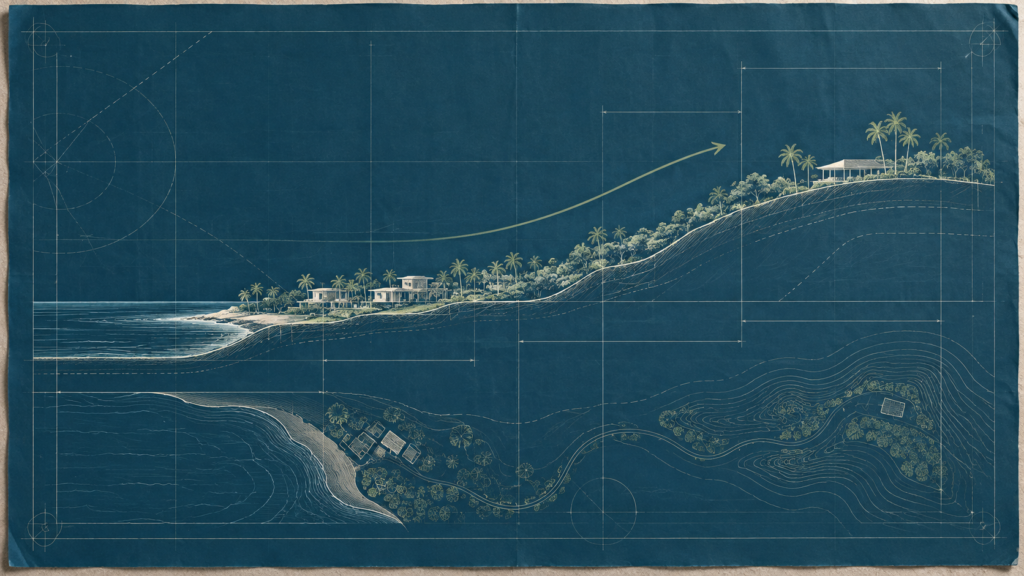
As primary coastal corridors reach saturation, premium capital invariably moves inland and upward. Understanding this spatial evolution is central to evaluating the long-term investment case for emerging destinations like Dauin, Negros Oriental.
The Ubud and Uluwatu Precedent
The Indonesian island of Bali serves as the region’s primary case study for lifestyle gentrification. In the early stages of Bali’s modern development, capital concentrated heavily on the flat coastal strips of Kuta, Seminyak, and eventually Canggu.
However, rapid commercialization and densification inevitably altered these ecosystems, resulting in severe traffic bottlenecks, resource strain, and noise pollution.
This coastal compression triggered a secondary migration of premium capital toward the interior ravines of Ubud and the dramatic limestone cliffs of Uluwatu. Wealthier, long-stay visitors and expats recognized that geographic elevation offered distinct operational advantages that flat beachfront plots could not replicate.
Elevated settings provide cooler ambient microclimates, consistent airflow, natural acoustic insulation from commercial zones, and permanent, unobstructed view corridors over valleys or ocean horizons.
Today, these inland and cliffside properties command rental and sales premiums that equal or exceed those of saturated beachfronts, proving that immediate sand access is not a permanent prerequisite for high-end valuations.
Saturated Infrastructure and Corporate Scale
When we look closer to home in the Philippines, the expansion of the property sector highlights a critical relationship between topography, infrastructure, and asset sustainability.
Comparing Siargao and Panglao reveals two distinct developmental challenges that independent investors must navigate.
Siargao has captured a highly successful, bohemian lifestyle market rooted in youth culture and surf tourism.
However, its rapid growth has exposed severe geographic and infrastructural friction. Despite ongoing road and airport expansions, the island continues to contend with power grid instability, resource strain, and highly constrained medical services.
For affluent retirement or executive digital nomad demographics, the absence of an established urban safety net limits the transition from a transient tourist destination to a permanent residential hub.
Conversely, Panglao, Bohol, has followed a high-density, institutional development path. Enabled by the opening of the Bohol-Panglao International Airport, the island’s premium beachfronts are increasingly dominated by large-scale, corporate-owned resorts.
While highly efficient for volume-driven hospitality funds, this corporate saturation leaves little room for low-density exclusivity. The natural island charm is progressively replaced by high-density vertical footprints, compressing the development margins for independent boutique builders trying to compete on the shoreline.
The Dauin Ridge and the Strategic Synthesis
This regional context explains why the uncompromised ridge lines of Dauin represent such a compelling strategic synthesis. Dauin enters its growth phase with the distinct advantage of hindsight, positioned to capture the low-density premium market that its neighbors are outgrowing.
Historically anchored by world-class marine conservation and diving at the Apo Island Marine Sanctuary, Dauin naturally attracts a more mature, affluent, and eco-conscious demographic than the transient crowds of Siargao.
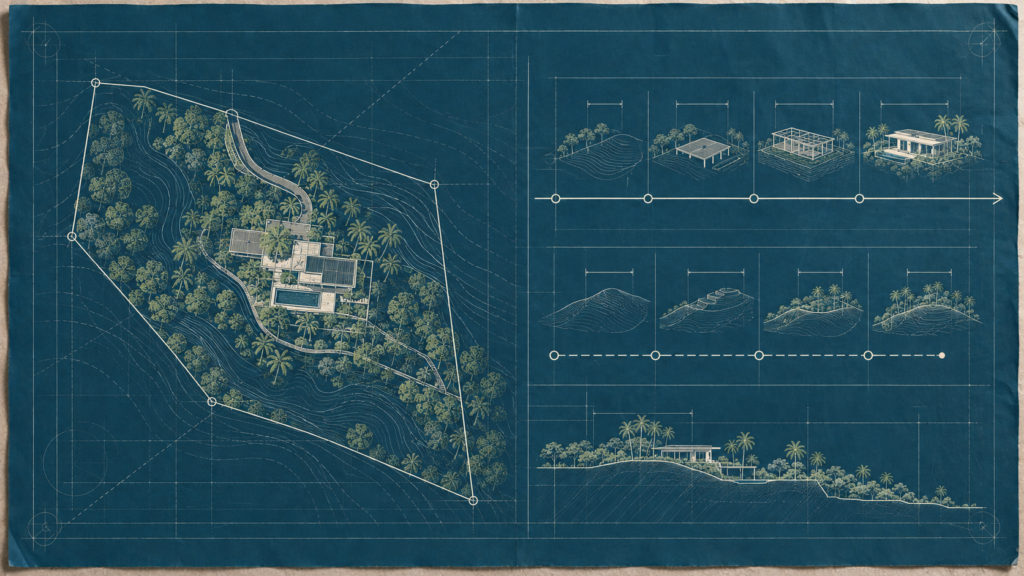
By acquiring elevated tracts, such as those situated on a 125-meter ridge 2.5 kilometers inland, a development can directly apply the lessons learned from Bali’s interior migration.
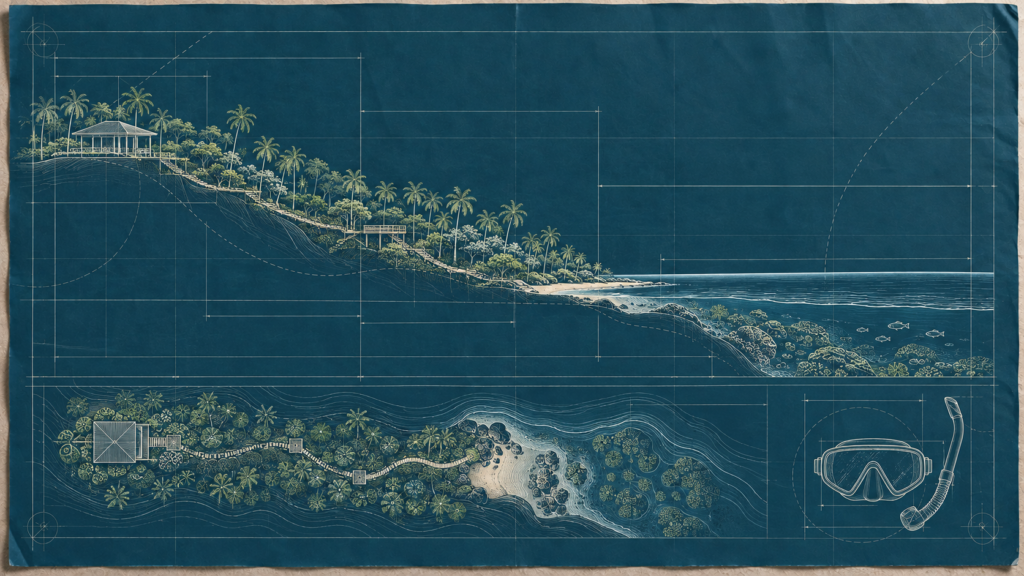
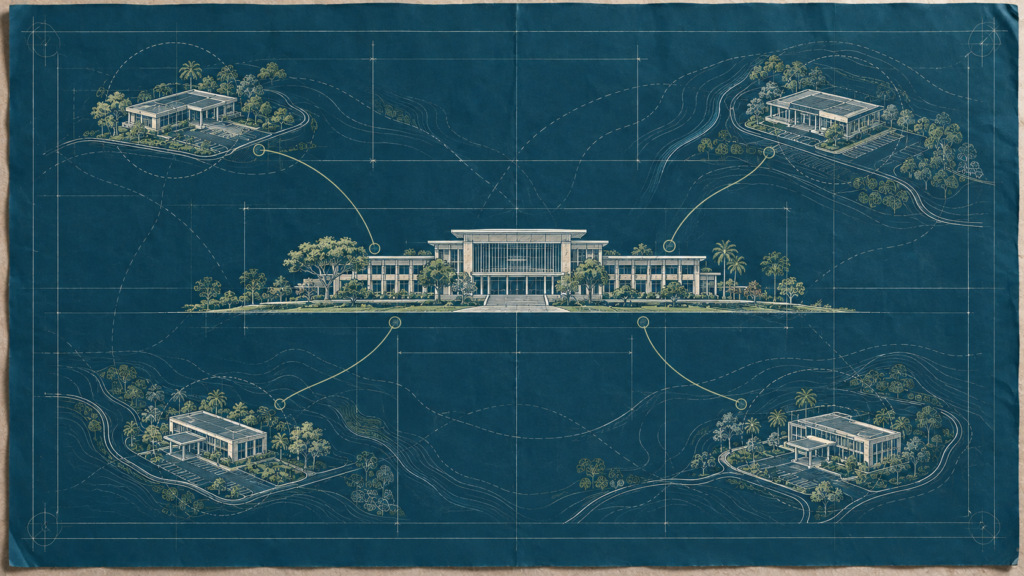
A low-density model consisting of a managed cluster of luxury casitas preserves the natural topography. This ensures absolute acoustic privacy and permanent, unobstructed 180-degree ocean views for each unit, completely insulating the asset from future development clutter below.
More importantly, Dauin completely addresses the infrastructure vulnerabilities seen in more remote destinations. It seamlessly combines rural isolation with excellent regional connectivity.
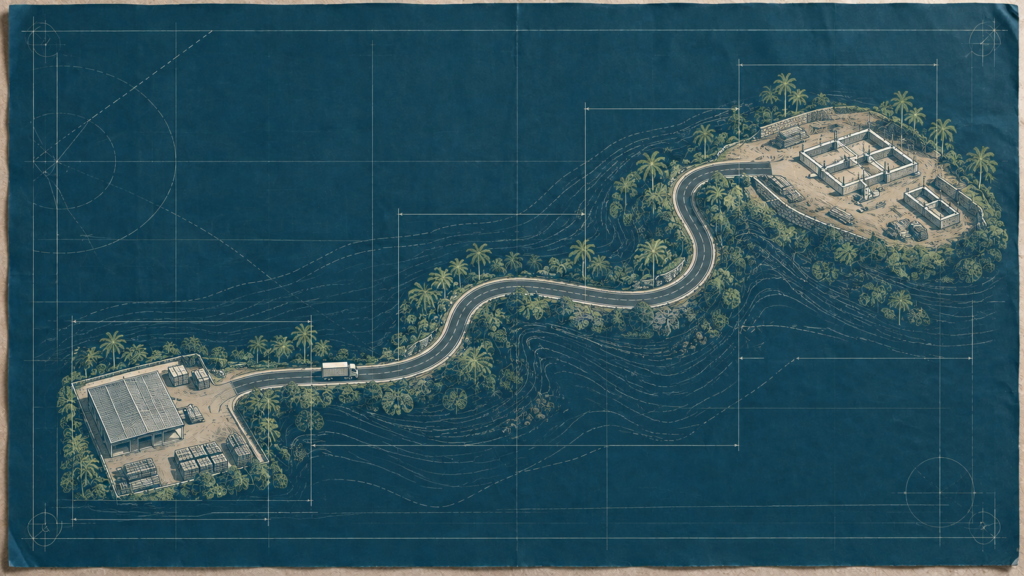
The ridge lines feature direct paved road access and stable utility infrastructure, located just twenty minutes from Dumaguete City.
As an established university town, Dumaguete provides top-tier tertiary healthcare, including Silliman University Medical Center.
This allows a project to offer an elite lifestyle product that Bali, Siargao, and Panglao structurally struggle to match: true luxury isolation backed by total medical and logistical security.
The future of sustainable lifestyle real estate isn’t crowded on the shoreline. It is up on the ridge, looking down.